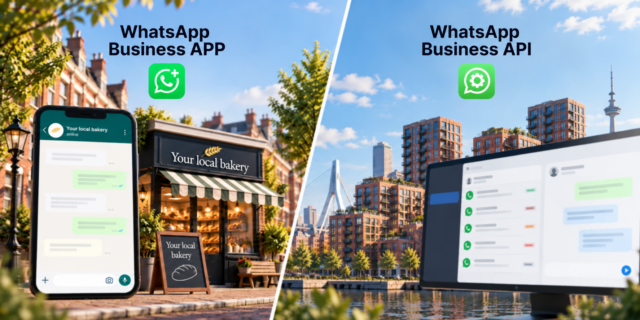
The app has hard limits. You usually only notice them once things get busy.
More agents than devices
The Business app runs on one primary phone, plus up to four linked devices. The corner bakery has more than enough with that. A customer service team of eight agents hits the limit straight away. Colleagues then end up sharing accounts or passing devices around, and both are stopgaps.
Nobody knows who’s picking up what
In the app, you can’t assign conversations to an agent. Two colleagues answer the same message, or neither of them does. The customer notices immediately. Queues, skills and priorities are missing too.
WhatsApp is cut off from everything else
If a customer calls after a WhatsApp conversation, the agent on the phone has no way of seeing that conversation. The customer has to explain their question all over again. Omnichannel customer contact requires a single history per customer, and the app has no connection to your CRM or contact centre.
You’re managing on gut feeling
How many WhatsApp conversations came in last week? How quickly did your team respond? The app only offers basic message statistics. You can’t use it to measure service levels or waiting times. For a customer service team that manages by KPIs, that’s a blind spot.
Customer data on separate phones
Conversations in the app are stored on your agents’ phones and linked devices. If someone leaves or a device gets lost, it’s hard to determine where customer data ends up. The Platform processes conversations centrally in your own systems. That makes agreements on retention periods and access under the GDPR much easier to manage.