WhatsApp Talk with us Nederlands

The Dutch spoofing bill that will change number verification

The Dutch cabinet has presented a draft bill to combat spoofing of Dutch phone numbers, through an amendment to the Telecommunications Act. Until the end of September 2026, anyone can respond to the consultation. The timing is deliberate: telephone fraud through spoofed numbers has increased significantly in recent years, and pressure for a solution is growing.

What spoofing is and how often it happens

With spoofing, a different number appears on your screen than the number actually placing the call. A fraudster can display a familiar Dutch number, sometimes even your own bank’s number, while the call originates from elsewhere.

The figures show this is not a small-scale problem. Official half-year statistics from the Dutch Fraudehelpdesk show that the number of reports involving telephone contact in the first half of 2025 rose by nearly 250 percent compared to the same period a year earlier: from 5,151 to 17,822 reports. The total number of fraud reports, across all types, grew by 50 percent in that same period.

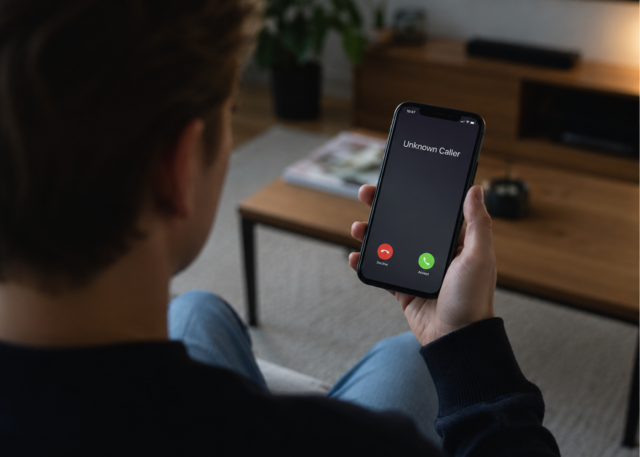
Because victims see a familiar Dutch number, they are more likely to answer and more likely to follow the caller’s story. The impact extends beyond the direct victims. International consumer research shows that “86 percent simply let an unknown number go to voicemail” and that nearly 60 percent miss important calls as a result.

The bill is aiming to put an end to spoofing

This is not the first attempt. The initial proposal dates back to late 2020. A revised version followed in 2022 and went into consultation. It was then revised so substantially that a whole new consultation round became necessary.

Number verification is deeply embedded in international VoIP routing, in the way providers pass calls between one another, and in legislation around net neutrality and privacy. This bill may change significantly before it becomes law.

Branded calling offers a solution

Where the Dutch bill targets spoofing, branded calling addresses the trust problem from a different angle. It gives legitimate callers a face: a name, a logo, sometimes a reason for the call, all visible before anyone picks up.

In the United States, this has long been standard practice through STIR/SHAKEN. In Europe it is now arriving as well, country by country. In the Netherlands, KPN, Odido, and Vodafone are currently working on implementation. A concrete product is expected in the first quarter of 2027.

A law targeting spoofing restores trust in the overall system, and branded calling adds to that by restoring confidence in your specific phone number. The two reinforce each other.

What you can do now

Start by mapping which call flows are most affected by a low pick-up rate. Customer service callback campaigns are the clearest example. In the meantime, work on building a clear sender identity across your existing channels, so the move to branded calling becomes an extension of what you already have rather than a full rebuild.

Sound of Data follows these developments closely. Want to know what branded calling can mean for your call flows and how to prepare for 2027? Read more in our article on branded calling or get in touch.