WhatsApp Talk with us Nederlands

Emergency calling explained: Emergency calls that never arrive

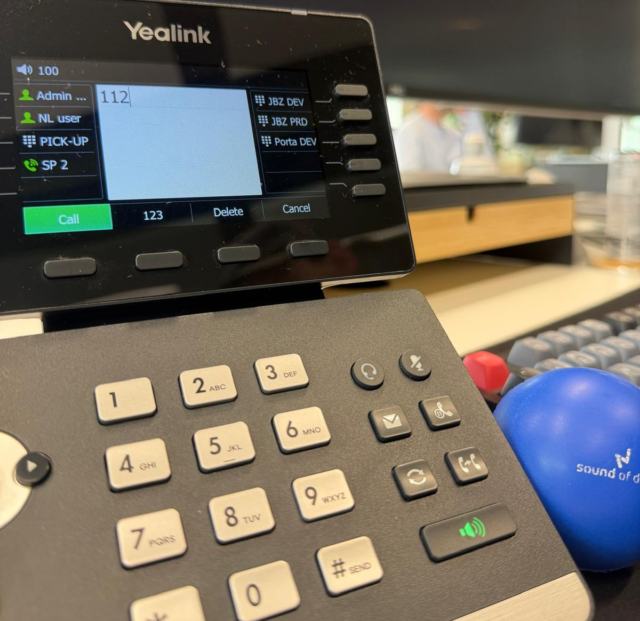
The receptionist of a hotel in Paris notices something is wrong. Someone has fallen, or worse. Help is needed urgently. She picks up the hotel phone and dials 112. The line stays silent. Nothing. No dial tone, no voice, no connection.

This is not a fictional scenario. This is what can happen when emergency calling is not configured correctly within a VoIP environment. And most organisations have no idea they're running this risk.

Why does it go wrong?

Modern business telephony runs on VoIP. Calls no longer travel over a physical phone line. They move across the internet, through SIP trunks. That brings real advantages: flexibility, scalability, international reach. But it also introduces a blind spot.

When a telephony environment is managed centrally (from the Netherlands, for example) the system doesn’t automatically know where a caller is physically located. Emergency calling depends on location. Which means it can fail. The nearest emergency dispatch centre needs to receive the call. But if the SIP trunk hasn’t been correctly configured with the right location data per site, the system routes the call the wrong way. Or the call doesn’t arrive at all.

Important to know: this applies specifically to fixed VoIP devices. A personal mobile phone uses the local mobile network and routes emergency calls correctly by default. But in environments like hotels, where staff are required to raise the alarm using the fixed device on-site, correct configuration isn’t a detail. It’s a requirement.

Not an exception, a blind spot

This affects every organisation with multiple locations or an international footprint. Hotels with properties across Europe. Retail chains with hundreds of stores. Companies with employees working abroad.

And the scale of the problem is bigger than most people realise. Every location, every floor, every workstation with its own VoIP device is, in principle, a site that needs to be configured individually. A company with ten locations across five countries has ten places where emergency calling can go wrong. Not one risk, ten. And for a retail chain with a hundred stores, that number adds up fast.

Most IT administrators assume 112 just works. Understandable. With analogue lines, it did. The line was tied to a fixed address, the location was known. That obvious connection no longer exists with VoIP. It has to be actively configured.

How does Sound of Data solve this?

Sound of Data ensures emergency calling works correctly. For every location, in every country. Whether you have ten sites or a hundred. The result: an emergency call from any fixed device always reaches the right, nearest dispatch centre. Not a centre hundreds of kilometres away. Not silence.

That way, you know your employees are protected. Wherever they work.

Check it now, not after the fact

Do your employees make calls from multiple countries? Do you have locations abroad? Are you using VoIP or a cloud-based telephony environment with fixed devices? Then there’s a real chance that emergency calls aren’t being routed correctly, or aren’t getting through at all.

Don’t wait until someone is in crisis to find out. Get in touch with us and have your emergency calling setup checked.