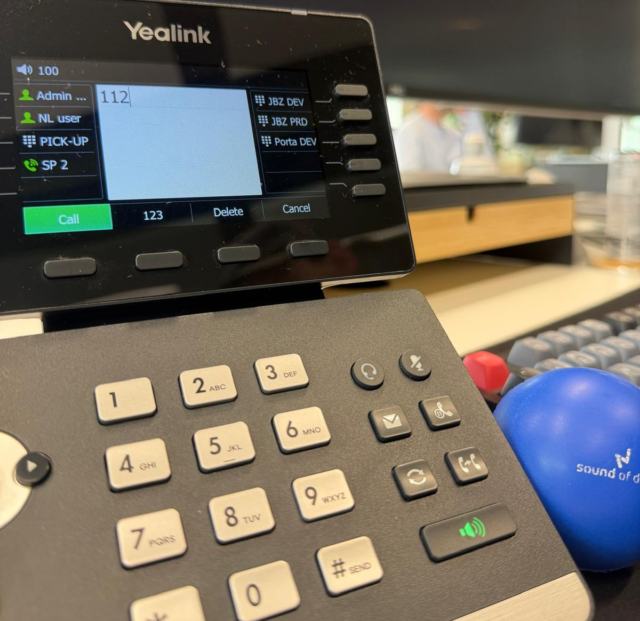
Modern business telephony runs on VoIP. Calls no longer travel over a physical phone line. They move across the internet, through SIP trunks. That brings real advantages: flexibility, scalability, international reach. But it also introduces a blind spot.
When a telephony environment is managed centrally (from the Netherlands, for example) the system doesn’t automatically know where a caller is physically located. Emergency calling depends on location. Which means it can fail. The nearest emergency dispatch centre needs to receive the call. But if the SIP trunk hasn’t been correctly configured with the right location data per site, the system routes the call the wrong way. Or the call doesn’t arrive at all.
Important to know: this applies specifically to fixed VoIP devices. A personal mobile phone uses the local mobile network and routes emergency calls correctly by default. But in environments like hotels, where staff are required to raise the alarm using the fixed device on-site, correct configuration isn’t a detail. It’s a requirement.